
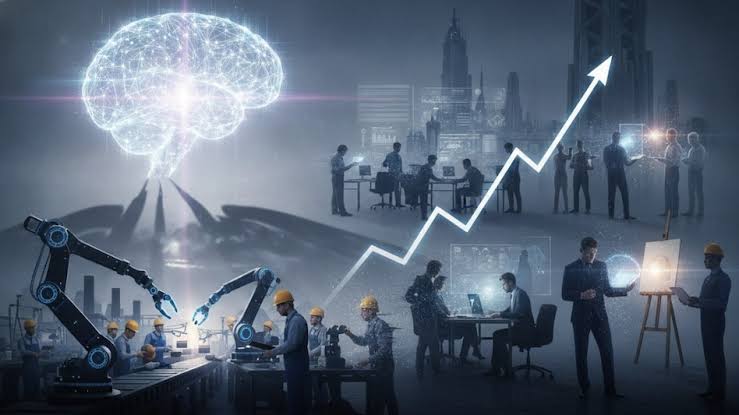
Machine intelligence alters American workplaces through automation routine duties, faster software deployment, shifting daily routines toward system management.
Employees spend less time drafting standard emails, more time verifying automated outputs. Automated screening tools review incoming resumes before human recruiters open files.
Generative models draft initial copy, software documentation. Human supervisors inspect algorithmic results to catch bias, security flaws. Corporations fund internal training programs to instruct staff on machine tools.
How Is AI Impacting US Job Market in 2026?
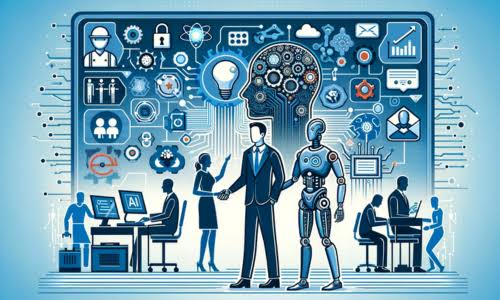
Gap between large enterprises, mid-market employers widens as proprietary models demand dedicated compute resources. Market adjustments move faster than public policy. Federal regulators propose voluntary guidelines for workplace AI usage, but binding federal legislation addressing hiring discrimination remains limited.
Workers must monitor broader employment trends across United States to gauge how specific job categories adapt to machine integration. Employers who fail to balance automation efficiency with employee retention risk losing experienced talent to competing firms offering clearer career development paths. Workers nationwide notice how algorithms change hiring practices, daily tasks.
Entry-level openings shrink across departments. Teams adjust. Software engineers write code faster while handling complex system architecture.
Customer support teams manage fewer routine calls as chat agents resolve simple queries. Financial institutions expand data oversight roles to monitor automated risk models. Technology scales quickly within massive firms.
Smaller businesses struggle with upgrade costs. Legacy computer systems require expensive custom integration before advanced models work properly. Budgets stretch thin.
Federal lawmakers propose voluntary workplace standards. Binding rules remain rare. Job seekers adapt through learning oversight skills.
Companies compete for staff who balance technical output with quality control. Corporations must balance compute spending with workforce training investments. Technology changes how everyday American jobs operate nationwide.
Companies deploy machine learning models to screen resumes, manage customer service queues, generate baseline software code. Workers face shifting expectations as automation absorbs repetitive digital workflows.
Employment patterns show clear divergence between shrinking entry-level roles, surging demand for oversight specialists. Job seekers notice pressure immediately on employment platforms, during remote interviews. Automated applicant tracking systems now filter out higher volumes unqualified resumes before human recruiters see them.
Gatekeeping leaves fewer openings for recent college graduates seeking traditional starting positions. Software engineering sector experiences most visible transformation across white-collar industries. Junior developers write fewer lines boilerplate code from scratch.
Automated assistants handle syntax generation, error checking within seconds. Senior engineers review AI output instead of typing basic functions. Workers navigate transition through distinct operational phases.
- Employers deploy machine learning tools for initial resume screening.
- Staff members learn to prompt models for routine administrative drafting.
- Teams restructure workflows around automated data analysis output.
- Managers evaluate personnel on editing speed rather than manual production.
- Graphic designers use generative models for initial concept layouts.
- Customer support centers route standard inquiries to conversational agents.
- Financial analysts build predictive models with automated statistical tools.
- Legal teams rely on software to scan document libraries for precedents.
| Customer Service | Conversational Agents | Staff Reduction |
|---|---|---|
| Marketing | Content Drafting Tools | Task Specialization |
Economic forecasters track these adjustments through federal labor reports, corporate earnings calls. Bureau Labor Statistics documents rising productivity metrics alongside flattening headcounts in specific office departments. Companies report lower training costs for basic tasks because software handles onboarding instructions.
Workers find themselves spending more hours verifying machine-generated results than creating original material. Labor economists emphasize that technical implementation speeds vary widely by region, company size. Small businesses adopt AI software slower than enterprise technology firms due to budget constraints, infrastructure limits.
Mid-sized logistics firm in Midwest operates differently than software startup in Silicon Valley. Bringing necessary cloud computing infrastructure into traditional corporate setups remains heavy lift for many established enterprises. Human resources departments adjust internal training budgets to address skill gaps among existing personnel.








Comments 0
No comments yet. Start the conversation.